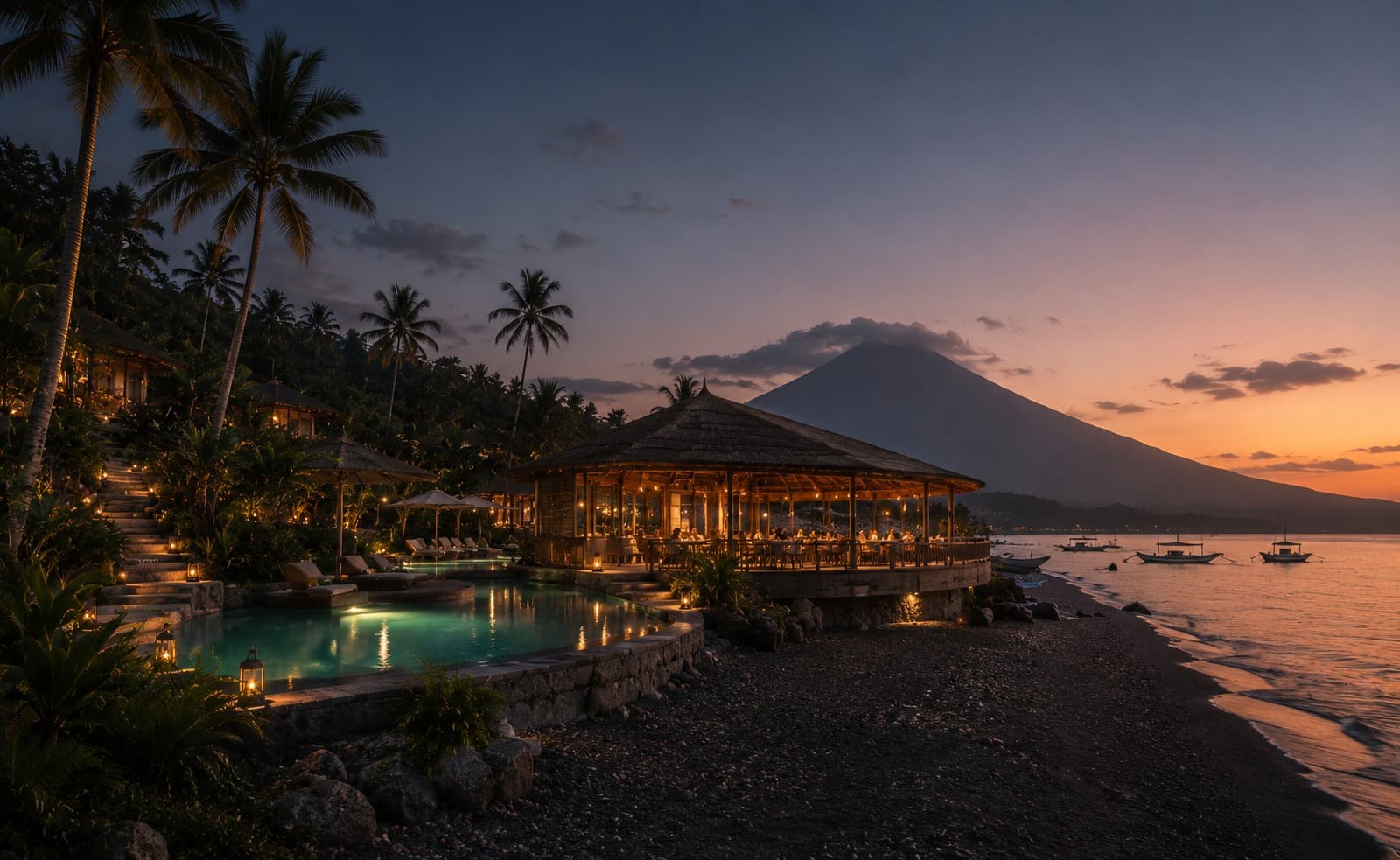
 [ VID-INVEST-DUSK ]
INVESTMENT
An early position in a hospitality brand being built for the long term.
Most hospitality investments in Bali are real estate plays: build, sell, exit. KAPAL is structured differently.
[ VID-INVEST-DUSK ]INVESTMENT
Most hospitality investments in Bali are real estate plays: build, sell, exit. KAPAL is structured differently.
The thesis
Most hospitality investments in Bali are real estate plays: build, sell, exit. KAPAL is structured differently. Brand, property and operations are kept in separate entities from day one — so what works in Amed can be repeated at a future location without renegotiating the model each time.
Each phase is designed to open as a complete, revenue-generating product before the next phase begins. Capital isn't locked into a single construction cycle.
Accommodation, ABU, TOYA, events and memberships — not a single-line hotel P&L.
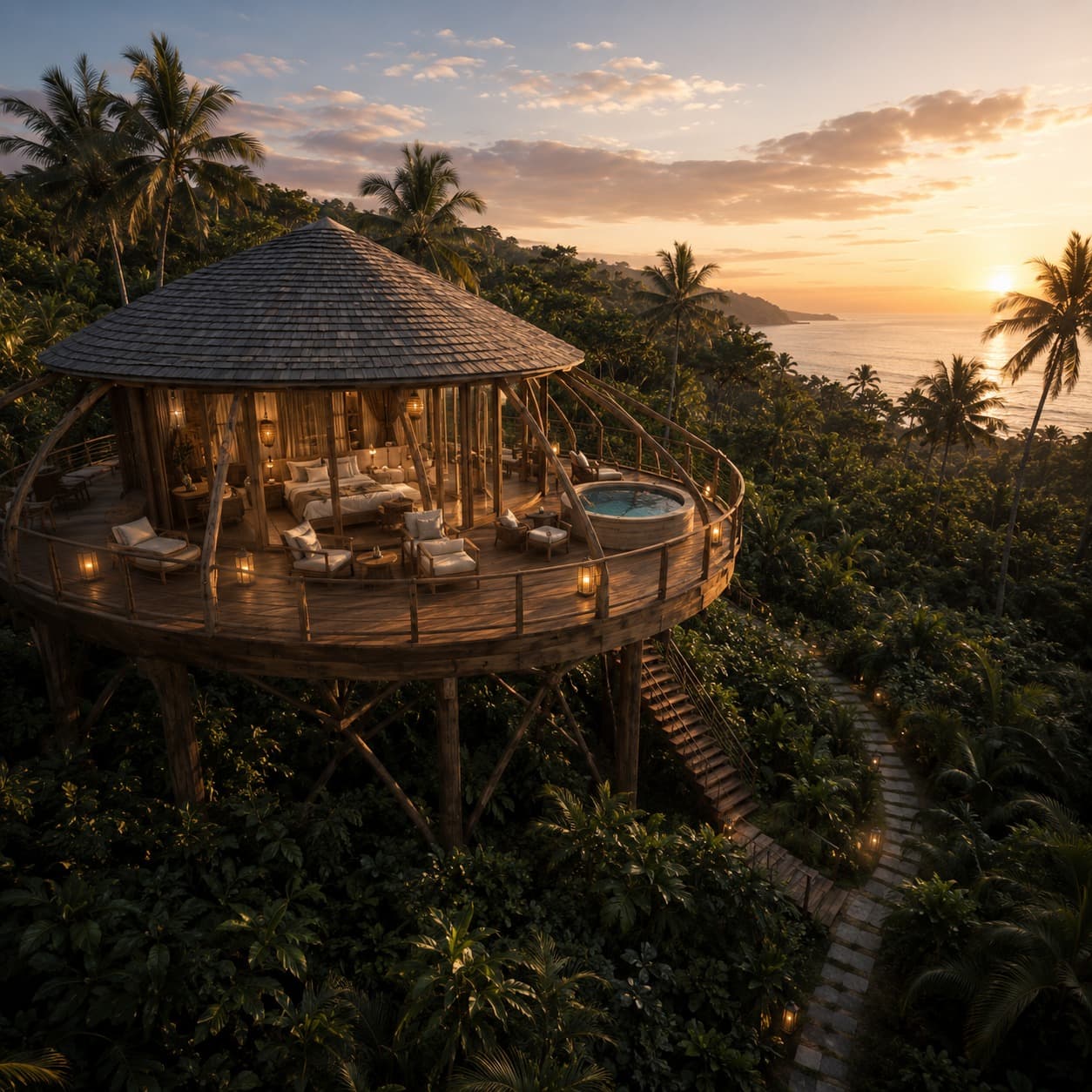
The treehouses and the lagoon are designed to generate organic brand reach and social sharing disproportionate to their construction cost. They are the project's most efficient marketing spend.
Five separate entities — holding, property, restaurant, wellness, management — create a template that travels to future KAPAL locations without restructuring. Built once, used repeatedly.
The timing case
Amed sits where Canggu and Pererenan sat years before the rest of the island caught on. Tourism-zoned beachfront that hasn't yet been priced for what it's becoming.
Bali's boutique and design-led hospitality segment continues to grow faster than supply. East Bali has almost none of it yet.
Recovery- and movement-focused wellness — TOYA's positioning — is one of the fastest-growing segments in global hospitality, and largely absent from this coastline.
KAPAL's audience increasingly chooses fewer, better experiences over programmed luxury. The positioning is aligned with where the market is going, not where it has been.
The backdrop
Indonesia's economy grew 5.7% in Q1 2026 — several times the pace of most mature Western economies. Tourism accounts for approximately 22% of Bali's GDP, with more than 17 million visitors expected in 2026. Bali's hospitality real estate market typically runs at 70–80% occupancy, with payback periods broadly in the 5–8 year range — significantly better than Western markets, where 55% occupancy and 20-year paybacks are common. These are general Bali market figures, not projections for KAPAL's own performance — KAPAL's financial model is shared separately with approved investors.
Indonesia's GDP growth (Q1 2026)
Share of Bali's GDP from tourism
Visitors expected on Bali in 2026
Typical occupancy, Bali hospitality real estate
What we're offering
This is not right for investors who need immediate liquidity, a fully de-risked completed asset, or a guaranteed return — none of which KAPAL, or any early-stage hospitality development, can honestly offer.
The Team
KAPAL is led by two founders who chose to build a hospitality business rather than sell off a piece of beachfront land. That distinction shapes every decision in this project — from the masterplan to the entity structure.
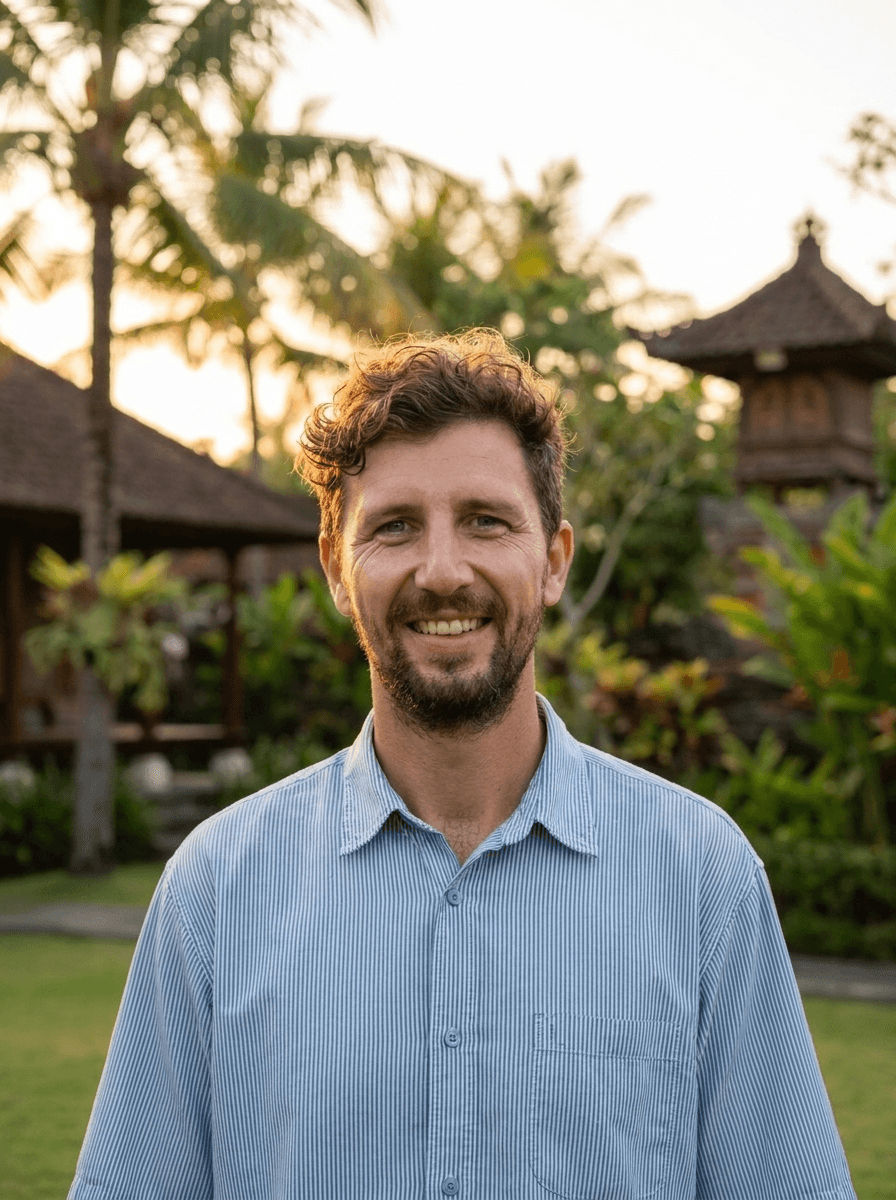
Co-Founder — Creative Direction & Strategy
Timo Francke brings together a rare mix of strategic thinking, creative direction and hands-on experience in events, tourism and placemaking. His background spans both the public and entrepreneurial side of the leisure industry, giving him a strong understanding of how destinations, experiences and communities are built.
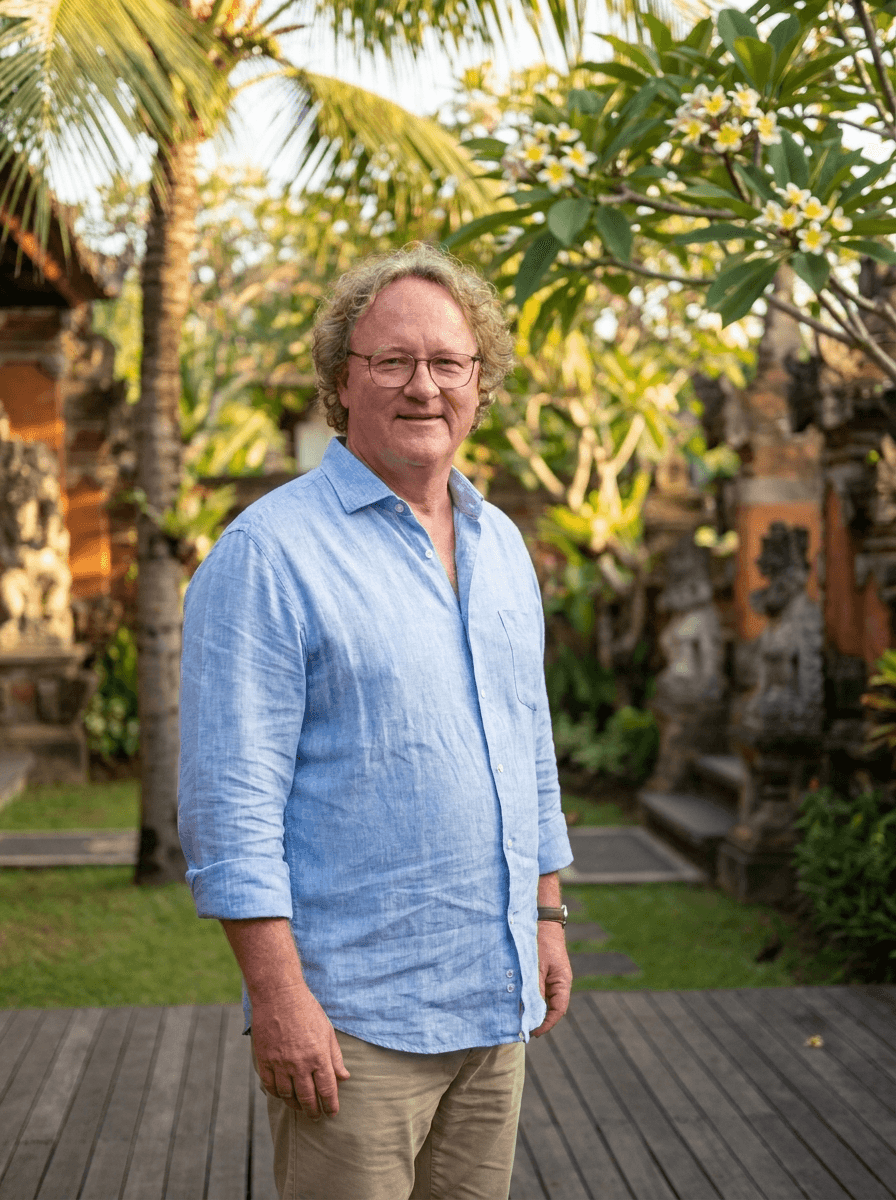
Co-Founder — Commercial & Operations
Francois Chambone brings a grounded entrepreneurial mindset to KAPAL, shaped by years of experience in business, people, sport and community building. As owner of Gameplan Arbeidsbemiddeling, a recruitment and staffing company based in Gorinchem, he has built his career around connecting people, recognising potential and creating practical structures that help others move forward.
Architect
The lead architect is being selected through a structured review process — top candidates have been shortlisted, with a decision expected once schematic design begins.
Consultants & partners
Legal, financial and local-execution partners are being finalised. Details will be added here once engagements are confirmed.
How it works
Tell us a little about yourself. We review every submission manually.
A direct conversation with the founders — no sales team, no intermediaries.
Full financials, masterplan, legal structure and phasing, shared under separate agreement.
Select your unit and confirm your position with a reservation agreement.
Formal purchase agreement, with payments staged against construction milestones.
Regular, direct updates as the project moves through its build phases.
Title transfer and handover once your unit is complete.
Your allotted weeks each year, alongside your share of the rental pool.
The risks
A direct account of the risks in this investment — and how we're managing them.
Delays, cost overruns or contractor issues are the most common risk in any ground-up development.
[ mitigation — phased self-funding build, local contractor track record, to confirm with founders ]
Indonesian permitting timelines can shift, and tourism-zoning rules can be reinterpreted.
[ mitigation — existing tourism licence on the site, local legal counsel, to confirm with founders ]
Returns are generated in Indonesian rupiah; investors thinking in EUR or USD carry currency exposure.
[ mitigation — to confirm with founders ]
Off-plan property in an emerging market is illiquid — there is no guaranteed secondary market or exit date.
[ mitigation — to confirm with founders ]
Bali tourism demand, while structurally strong, is cyclical and exposed to external shocks.
[ mitigation — diversified revenue across stay/ABU/TOYA, to confirm with founders ]
Day-to-day performance depends on KAPAL Management's ability to run a consistent guest experience.
[ mitigation — separate operating entity, to confirm with founders ]
Foreign-linked ownership in Indonesia relies on HGB title and PT PMA structures that carry their own legal complexity.
[ mitigation — HGB title, structured legal review per investor, to confirm with founders ]
Where we are now
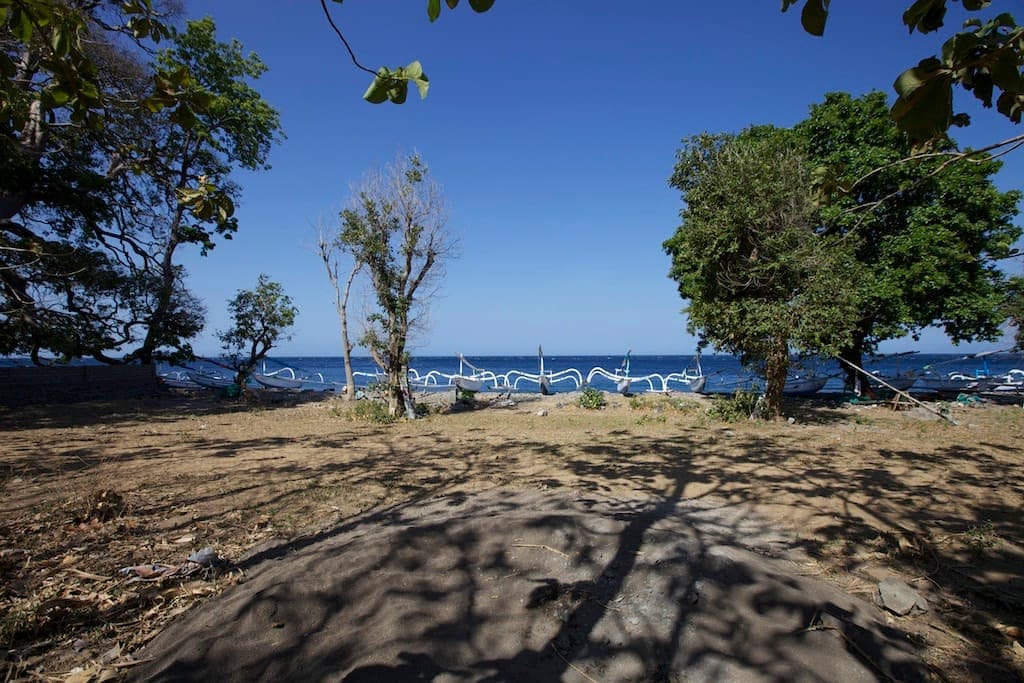
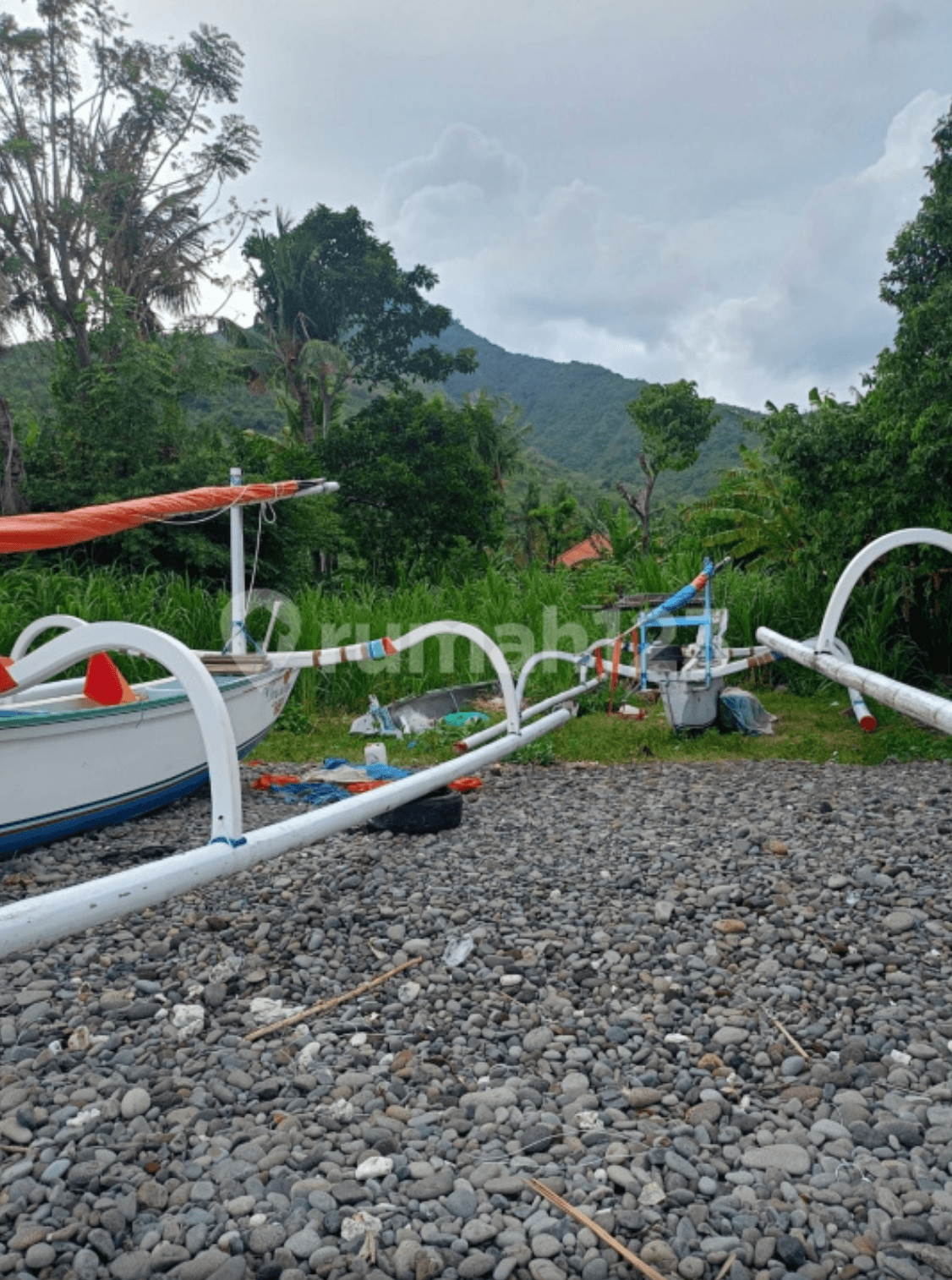
Site secured: 2,770 m² of direct beachfront in Amed, official tourism zoning confirmed.
Architect selection and schematic design — masterplan, material direction and climate strategy.
Permit documentation and approvals, building on the existing tourism licence for the site.
Phase 1 — Foundation: hotel rooms, the ABU restaurant and infinity pool.
Off-plan sales process for select villa units, opened to qualified buyers ahead of completion.
Soft launch of Phase 1, followed by Phases 2 and 3.
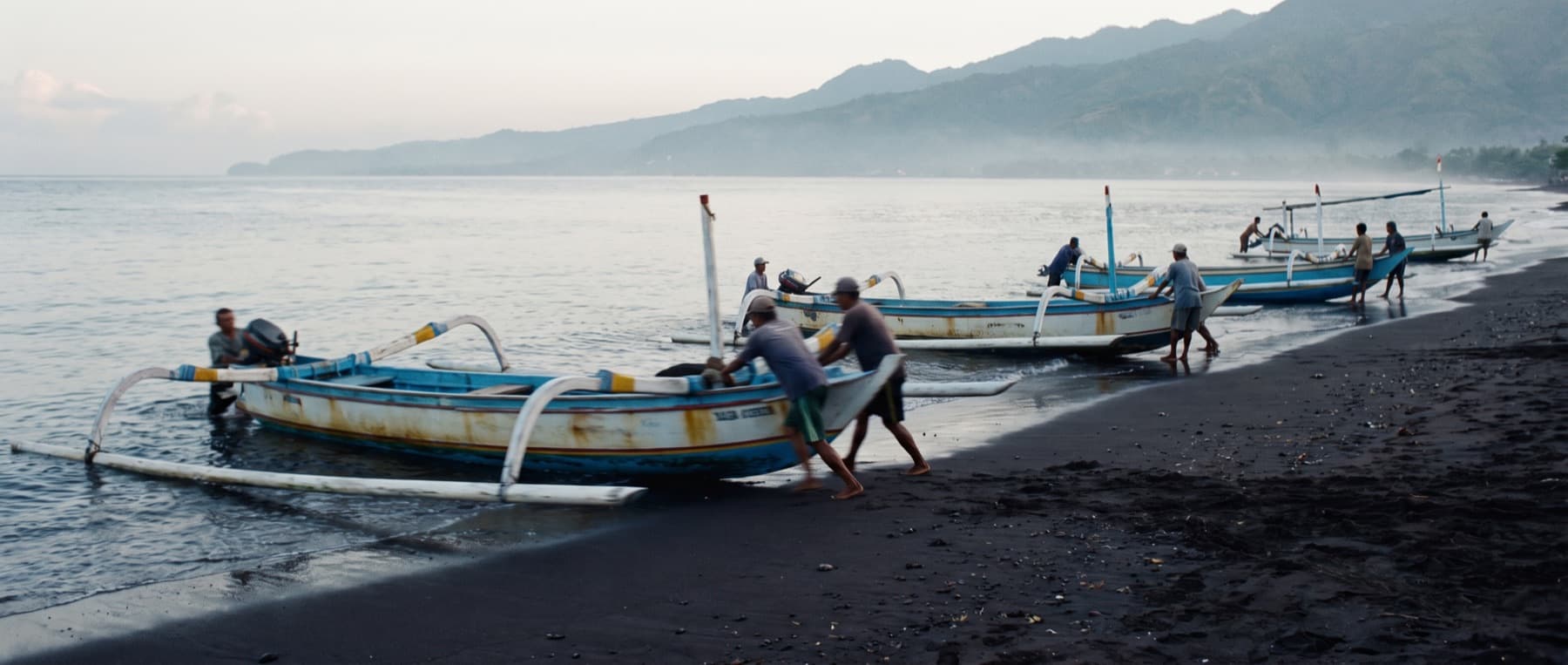
Real site photography, not renders.
Structure
KAPAL is structured so that what works in Amed can be repeated at a future location without renegotiating the model each time. Five entities, each with one job:
Owns the brand, the intellectual property and future projects.
Owns the land, buildings and infrastructure.
Operates ABU.
Operates TOYA.
Runs hospitality, rentals, marketing and day-to-day operations.
FAQ
The land is held under an HGB (Hak Guna Bangunan / right-to-build) title — the standard structure for foreign-linked tourism development in Indonesia. Full details on the ownership mechanism are shared with approved investors.
The site sits within an official tourism zone (Kawasan Pariwisata). An existing tourism licence covers the land, and permit documentation (IMB/PBG) is in preparation.
KAPAL Property oversees construction, working with a selected architect and local Amed/Karangasem contractors. Phasing is designed so each phase opens as a complete, operating product before the next begins.
KAPAL Management — a dedicated operating entity, kept separate from the property and brand entities by design, so the model can be repeated at future locations.
Tax treatment depends on an investor's structure and country of residence. For Dutch investors, a tax treaty between the Netherlands and Indonesia avoids double taxation as a general matter — but exact treatment is confirmed individually with approved investors as part of the review process, not published generally.
Off-plan owners participate in a mandatory rental pool, with a defined split of rental income and a set number of personal-use weeks per year. Exact terms are shared with approved investors.
A PT PMA is a foreign-owned Indonesian company — the standard general vehicle for foreigners holding Indonesian assets or operating a business. It's worth understanding as general background, but it describes independent land ownership, not KAPAL's own structure: investing in KAPAL works through an off-plan unit purchase inside KAPAL's mandatory rental pool (see above), not through setting up your own PT PMA to hold land directly.
In general, owning Indonesian property or a business through a PT PMA can support an investor (KITAS) visa application. Whether that applies to a specific KAPAL purchase depends on the ownership vehicle used and is assessed case by case — this isn't a guarantee tied to any particular unit.
We review every submission manually and follow up within a few days with an introductory call. Access to the full deck and documentation is granted personally — this is the beginning of a conversation, not an automatic download.
Request the deck
Detailed financials, the full masterplan, legal structure and phasing documents are available to approved investors. Access is granted manually — this is the beginning of a conversation, not an automatic download.